
Contact Lenses

Updated: 2 hours ago
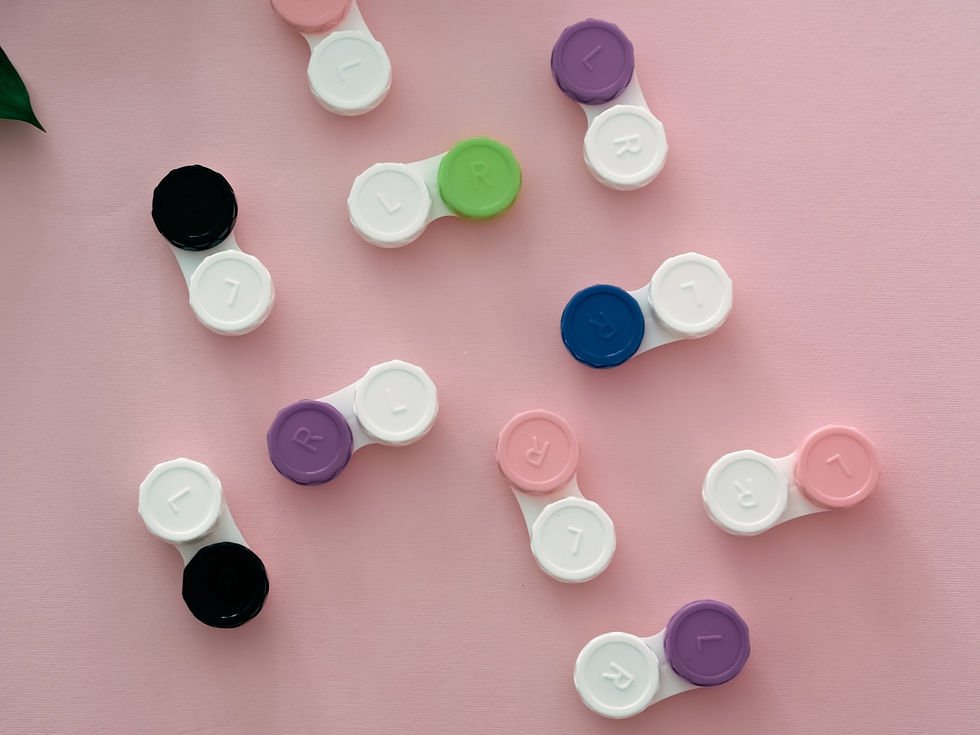
Contacts are generally categorized by material, wearability and correction ability. The greatest majority of contact lens patients wear soft lenses. Soft lenses come in a variety of disposable forms (daily, bi-weekly and monthly) as well as long-term wear lenses. Some soft lenses are considered “daily wear”, which means they must be removed before sleeping; while others are “extended wear” and may remain in the eye for several days at a time. Hard and gas permeable lenses are long-term wear lenses only, and can be either “daily wear” or “extended wear”.
Vision correction classifications for contact lenses are spherical, toric and bi-focal. Spherical contacts can correct nearsightedness and farsightedness. Toric lenses may be used to correct astigmatism. Patients with presbyopia may be able to wear bi-focal contacts to give them correction for both their distance and near vision. There are also specialty lenses that correct Astigmatism and Presbyopia, called Torics.
Policies
Your contact lens exam includes a full ocular health checkup, a complete visual analysis, and a contact lens fitting
You will be able to get contact lenses and/or glasses when you get a contact lens exam
If you are a first time, contact lenses wearer you will require a contact lens training which includes: teaching you how to clean and take care of your contacts, how to insert and remove them from your eyes, and understand what to expect as you wear these new contacts as a first-time wearer
Dr. Wood-Bentley will fit you with a pair of diagnostic contacts and let you wear them for one week before returning for a progress check. The progress check is to make sure that you have good vision and the lenses are comfortable. We will order multiple samples, if need be, to make sure the contacts fit well, and you see well. This contact lens progress check is included in the cost of the contact lens exam
When you are through with the progress check we will order your new contact lenses. If we need to order your contacts, we will require at least 1/2 down payment before the contacts can be ordered
When we order your contacts if you decide that you do not want them BEFORE the boxes are opened, we can return them to the manufacture and refund you the payment minus postage and restocking fee. If we order your contacts and you decide you do not want them and have OPENED the box, we cannot return them unless they are defective, which the manufacture will determine. This is why we use samples to make sure they fit, they are comfortable, and you see well.
You will be contacted when your contacts come in
lens care
The key to avoiding the irritation and infection sometimes associated with contact lens wear is proper cleaning. Regardless of the type of disinfection system you choose there are a number of common steps that must be followed.
Always wash your hands prior to handling your contact lenses.
Make sure after washing your hands that you dry them with a clean lint free towel.
If you are removing your lenses for any period of time, apply a few drops cleaning solution to the lens. Rub both sides of the lens surface to help remove deposits, debris, protein build-up, and any bacterial film. Removing surface deposits and other debris not only contributes to improved vision and comfort but also reduces the risk of infection and allergy. Soft extended-wear contacts may be the most likely to develop a protein build-up that can lead to lens-related allergies.
After thoroughly cleaning the lens, rinse it with the recommended solutions and store them in fresh solution in a clean case. Homemade saline solutions have been linked to serious eye infections and should never be used.
Your empty contact lens case should be thoroughly rinsed with warm water and allowed to air dry.
All contact lens cases need to be cleaned frequently, including disposable lens cases.
Advice for Contact Lens Patients:
Never use or allow tap water to touch your lenses.
Use fresh solution every day.
Make sure to replace your contact lens containers on a regular basis.
If you are swimming, wear goggles. If you are showering, keep your eyes closed. If you are in a spa, try to not get water splashed on the surface of your contact lenses.
If you have a red or a sore or irritated eye, take your contact lenses out and seek your practitioner’s advice immediately.


Comments